
Fomo day trading: the tools, the limits and the real cost
You can day trade on fomo in the sense of buying and selling a spot token within the same day, and the app now has one-tap Quick Trades and a slippage setting. But every trade pays a fee, a round trip costs about 1% on most chains before network fees, spot trades have no limit or stop orders, and perps are closed to US users. fomo’s own guides warn that trading often usually means more fees and more losses.
Can you day trade on fomo?
Yes, in the plain sense of buying a token and selling it again the same day. fomo’s own explainer on trading styles defines day trading as trades “opened and closed within the same day”, and the app lets you do that from one cash balance across seven chains. What it does not do is market itself as a day trading platform. fomo is built around a social feed, leaderboards and following other traders, and its help center has no article on day trading at all.
For a US reader who has not opened an account yet, the useful question is narrower: what does frequent trading actually cost on fomo, which tools make it faster, and what is missing compared with a brokerage built for active traders? That is what this page covers. Everything here comes from fomo’s help center, its answers pages and its terms, checked on 8 November 2026. It is not advice to day trade, and nothing here promises a profit.
What does a day trade cost on fomo?
Day trading is a cost game first. Every buy and every sell pays the fomo fee, so a single round trip pays it twice. Using fomo’s published fee schedule and assuming the price does not move, here is what one round trip costs in fomo fees alone:
| Chain and order size | fomo fee per side | Round trip in fomo fees | Network fee |
|---|---|---|---|
| Solana, 20 USDC | 2% (5 to 47.50 USDC tier) | about 0.80 USDC, roughly 4% | paid by fomo |
| Solana, 100 USDC | flat 0.95 USDC | about 1.90 USDC, roughly 1.9% | paid by fomo |
| Solana, 250 USDC | 0.50% | about 2.50 USDC, roughly 1% | paid by fomo |
| Base, BNB Chain, Monad, 100 USDC | 0.50% | about 1.00 USDC, roughly 1% | paid by you, twice |
| Ethereum, 100 USDC | 0.50% | about 1.00 USDC, roughly 1% | paid by you, twice, and usually the highest |
The Solana tiers apply to fomo’s lowest-fee route on Solana; other Solana routes cost 0.50% with a 0.95 USDC minimum. Selected major tokens cost 0.05% per trade, with a minimum fee on smaller trades that fomo does not publish. All tiers are on the fomo fees page, and you can price your own order sizes with the fomo fee calculator.
Now set that against the moves day traders aim for. fomo’s own scalping explainer describes targets of roughly 2% to 5% per trade. On a 0.50% chain, a 1% round trip takes a fifth to half of that gross target before network fees and slippage. On a small Solana order in the 2% tier, the round trip can be as large as the move itself. Ten 100 USDC round trips a day on Base would pay about 10 USDC in fomo fees, plus twenty network fees, whether the trades win or lose. fomo says it plainly in its scalping article: frequent trading “means paying more in fees, which can eat into thin margins.”
Which fomo tools help you trade fast?
fomo has added several features in 2026 that matter to someone trading often:
- Quick Trades. One tap on a preset chip sends the order straight away, with no slide-to-confirm step. Buy chips are fixed amounts from your cash balance and sell chips are a percentage of the position, with 100% selling everything. fomo says it is on iOS and Android, and that a review step still appears when price impact or, on EVM chains, the network fee is high.
- Slippage settings. The default is Auto. A custom value is the most price movement you accept; beyond it the trade fails instead of filling at a worse price. fomo does not recommend a value, and the setting is saved per device, not synced between app and web. The details are in our guide to fomo slippage settings.
- Price impact estimate. fomo’s help center tells you to check it before confirming, because on a thin pool your own order moves the price.
- fomo web. The same account in a desktop browser, with trades appearing on your phone as well.
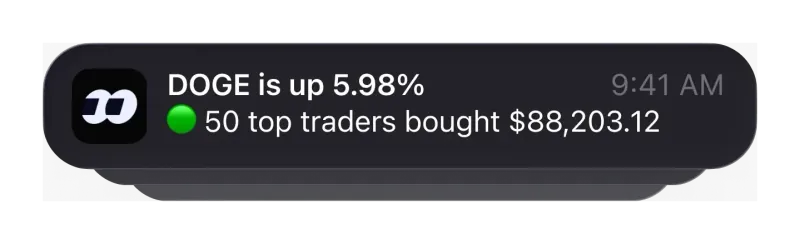
- Follow alerts. Notifications when accounts you follow trade, covered in our fomo app notifications guide.
Speed cuts both ways. A one-tap order is final on-chain the moment it confirms, and fomo’s help center says confirmed trades cannot be reversed.
What can’t you do when day trading on fomo?
This is where fomo differs most from a platform built for active traders. Based on fomo’s own documentation:
- No limit or stop orders on spot. fomo does not document limit or stop orders for spot trades. Stop loss and take profit exist only on perps. Our page on fomo limit orders explains what that means for planning exits.
- No price alerts on spot tokens. fomo’s notifications article says price alerts apply to perps positions only, and you cannot set an alert for an arbitrary token price.
- No perps for US persons. Leverage and shorting run through perps, and fomo says they are not available to U.S. persons, so a US user trades spot only.
- A minimum sell. fomo’s help center sets it at 2 USDC on most networks and 5 USDC on Ethereum, so tiny leftover positions can get stuck (see why a token will not sell on fomo).
- No bots. fomo publishes no API, and its terms ban third-party bots and scripts; the rules are summarized on our fomo trading bot page.
How does fomo describe day trading, scalping and swing trading?
fomo’s answers pages compare trading styles by how long a position is held. We quote them here as fomo’s descriptions, not as recommendations:
| Style | How fomo describes it | The trade-off fomo names |
|---|---|---|
| Scalping | Trades lasting seconds to minutes, aiming for 2% to 5% moves | More fees, constant focus, risk of impulsive decisions and overtrading |
| Day trading | Trades opened and closed within the same day | Covered only as a category in fomo’s style comparison |
| Swing trading | Positions held for days to weeks, targeting 20% to 100%+ moves | Fewer fees, but exposure to sudden moves overnight and at weekends |
| Long-term | Positions held for months or years | Capital tied up for longer |
The swing trading article makes the cost point from the other side: “Trading less frequently means paying fewer transaction fees.” On fomo, where every side of a trade carries a fee, that is not a minor detail.
What rules does fomo suggest for trading often?
fomo’s list of the biggest mistakes new traders make puts overtrading near the top, described as “making dozens of trades per day without clear setups, driven by boredom”, and adds: “Each trade has fees and risk. More trades doesn’t mean more profit. Often it means more losses.” Its article on avoiding emotional trading suggests rules like these:
- Write down your entry conditions before you buy.
- Set a profit target and a stop level before entering, since the app will not hold a stop order for you on spot.
- Cap how much of your balance any single trade can risk.
- Check positions at set times instead of constantly.
- Set a daily loss limit and stop trading when you hit it.
- Step away for at least an hour after a significant loss, and trade smaller when you feel anxious or overexcited.
These are fomo’s suggestions, not ours, and they do not make day trading safe. For habits aimed at your first weeks in the app, see our fomo beginner tips.
How do frequent trades affect your records and taxes?
Every trade lands in your history. fomo’s profile shows open positions with unrealized PnL and closed positions with realized PnL, and the clock icon opens a History screen filtered by trades, transfers and cash. How those numbers are calculated is on our fomo PnL guide.
Taxes are the other side of trading often. fomo’s terms say it does not collect, report or remit taxes for you. The IRS treats digital assets as property, and fomo’s own tax explainer notes that each sale is a taxable event and that gains on positions held under a year are short-term. Fifty trades a week means fifty or more lines to account for. We do not give tax advice; our page on fomo crypto taxes covers what the app records and what it does not.
If you still want to try active trading, the sensible order is to read how fomo trading works overall, follow the sign-up guide with a referral link attached at the start, and test with amounts you can afford to lose completely.
Fomo day trading questions
Does a referral link make a difference if I trade often?
It is one of the few costs you can lower. fomo’s help center says a referral code cuts the standard 0.50% fee to 0.45%, which matters more the more trades you place. It only attaches at sign-up, so it cannot be added once the account exists.
Do I pay a network fee on every fomo trade?
Only off Solana. fomo’s fee article says it covers gas, priority fees and token rent on Solana, while on every other network you pay the network fee on top of the 0.50% fomo fee. On a busy day trading schedule, that difference adds up.
Can I day trade perps on fomo from the US?
No. fomo’s help center says its perpetual futures are not available to U.S. persons. A US user can only trade spot tokens, which have no leverage, no shorting and no stop loss in the app.
Can I use a bot to day trade on fomo?
fomo documents no bot feature or public API, and its terms ban third-party bots and scripts unless fomo has expressly authorized the integration. The one-tap option fomo does offer is Quick Trades, which still needs you to tap each order.
Can I day trade on fomo from a computer?
Yes. fomo web runs in a desktop browser at fomo.family on the same account, and fomo says a trade opened on desktop shows up on your phone instantly. Slippage settings are saved per device, so set them on both.
Verified 9 October 2026. Figures on this page were checked against these sources on that date. fomo can change fees and features at any time; if something here no longer matches, tell us through the contact page and we will update it.
- fomo answers: What is scalping in crypto trading? (19 February 2026)
- fomo answers: What is swing trading in crypto? (19 February 2026)
- fomo answers: How do I avoid emotional trading in crypto? (19 February 2026)
- fomo answers: What are the biggest mistakes new crypto traders make? (19 February 2026)
- fomo help center: Trading fees on fomo
- fomo help center: How referral codes and fee discounts work
- fomo help center: Quick Trades, trading in one tap
- fomo help center: Slippage settings
- fomo help center: Why did my trade fill at a different price than the quote
- fomo help center: Notifications (updated 12 August 2026)
- fomo help center: What perpetual futures are on fomo (10 June 2026)
- fomo help center: Stop loss and take profit on perps (10 June 2026)
- fomo help center: Why can’t I buy or sell this token
- fomo help center: Can I reverse a trade or transfer (23 April 2026)
- fomo Terms of Service (updated 26 October 2026)
- fomo help center: Understanding your PnL (23 April 2026)
- fomo help center: Transaction history (23 April 2026)
- fomo answers: Do I have to pay taxes on memecoin trades? (8 February 2026)
- IRS: Digital assets (reviewed 2 September 2026)
- fomo blog: Announcing fomo web (29 April 2026)