
Fomo vs Robinhood Crypto: which fits a first-time buyer?
Short answer: Robinhood Crypto suits you if you want Bitcoin, Ethereum and other well-known coins in a regulated US brokerage app, held for you in cold storage, with limit and stop orders. fomo suits you if you want to trade newer tokens and memecoins on seven chains from a wallet you control, next to a feed of what other traders are buying, and you are fine with a published 0.50% fee. Here is the side-by-side, using only what each company publishes.
What is the main difference between fomo and Robinhood Crypto?
They are built for different jobs. Robinhood Crypto sits inside a brokerage account: you open it with your Social Security number, Robinhood holds your coins, and you buy from a list of established cryptocurrencies. fomo is a social trading app: you sign up with email or Apple ID, fomo creates a non-custodial wallet for you through Privy, and you can buy almost any token on Solana, Base, BNB Chain, Ethereum, Monad, Robinhood Chain and Arc.
| fomo | Robinhood Crypto | |
|---|---|---|
| Company | FOMO Labs, Inc., New York | Robinhood Crypto (part of Robinhood) |
| Sign-up | Email or Apple ID; no document check at sign-up | 18+, valid SSN, US residential address, US citizen, permanent resident or valid visa |
| Who holds the crypto | You: non-custodial wallet by Privy, private key exportable | Robinhood: “the majority of your coins in cold storage” |
| What you can buy | Tokens on 7 chains, including new memecoins | Popular coins and stablecoins, e.g. BTC, ETH, DOGE, SHIB, LINK |
| Trading cost | 0.50% per trade (0.45% with referral); Solana tiers; 0.05% on selected majors | Default: no separate fee, cost built into the spread; optional exchange routing 0.00%–0.95% |
| Network fees | Paid by fomo on Solana; paid by you on other chains | Not charged on trades; no deposit or withdrawal fees |
| Order types | Buy and sell; limit orders not documented | Market, limit, stop, stop limit, 24/7 |
| Funding | Apple Pay, debit card, USDC on Solana, Base or BNB Chain | Robinhood account balance; crypto transfers in |
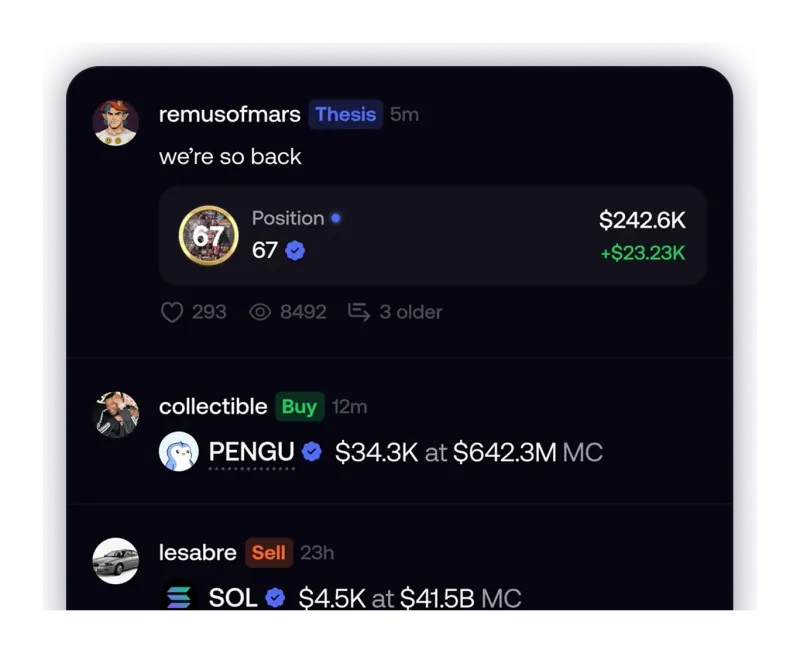
| Social features | Feed, follows, leaderboard, trade notifications | Not described on Robinhood’s crypto page |
| Where it works | Most countries outside fomo’s restricted list, including the US | Every US state and DC |
Which one costs less per trade?
fomo shows its fee as a line item. On Base, BNB Chain, Monad, Ethereum and Robinhood Chain it is 0.50% per trade, and you pay the network fee on top. On Solana, fomo pays the network fee, but small orders use tiers: 0.10 USDC under 5 USDC, 2% from 5 to 47.50 USDC, a flat 0.95 USDC from 47.50 to 190 USDC and 0.50% above that. Selected major tokens cost 0.05%, with a minimum fee on smaller trades that fomo does not put a number on. Joining through a referral link cuts the fee by 10%, to 0.45%. The full breakdown is on our fomo fees page.
Robinhood works differently. By default, orders in the app use market maker routing: there is no separate fee, and Robinhood says that, as of 15 June 2026, it receives $0.95 for every $100 of crypto traded this way, included in the spread. Robinhood also notes spreads are usually smaller for well-known coins and larger for less-traded ones. Active traders can switch to exchange routing, which charges 0.00%–0.95% depending on 30-day volume.
| Order | fomo on Solana | fomo on Base | Robinhood’s share (default routing) |
|---|---|---|---|
| $25 | 0.50 USDC (2% tier), no gas | 0.125 USDC + network fee | About $0.24, inside the spread |
| $100 | 0.95 USDC (flat tier), no gas | 0.50 USDC + network fee | $0.95, inside the spread |
| $250 | 1.25 USDC (0.50%), no gas | 1.25 USDC + network fee | About $2.38, inside the spread |
The Robinhood column is only Robinhood’s own share at its published rate; the market spread you actually pay can be wider. fomo figures are before the referral discount. Neither column is a promise of what a specific trade will cost on the day.
Who holds your crypto on each app?
This is the biggest structural difference. Robinhood is custodial: it says it holds the majority of customers’ coins in cold storage, and it states that crypto held through Robinhood Crypto is not FDIC insured or SIPC protected. You can send crypto out to other wallets when you want.
fomo is non-custodial. Its terms say your wallet is generated and managed by Privy, and fomo’s security article describes the key being split into shares and reassembled only in secure hardware when you sign. You can export the private key at any time. The trade-off: nobody at a brokerage is holding the coins for you, and the email or Apple ID you log in with becomes the key to your money. Our guide to fomo’s wallet security and the fomo wallet walkthrough explain both sides. If you also want to compare fomo with a stand-alone wallet, see fomo vs Phantom.
What can you trade on fomo that you cannot on Robinhood?
Robinhood’s crypto page names popular coins and stablecoins such as BTC, ETH, DOGE, SHIB, AVAX, LTC, UNI, ETC, LINK, XLM and AAVE, but does not publish a total, so we will not claim which newer tokens it lacks. What is clear is the model: Robinhood chooses a list; fomo lets you trade tokens on seven chains, including memecoins launched days ago. If that is why you are here, read how to buy meme coins on fomo first, because the same freedom lets you buy tokens that go to zero.
Two fomo features are not open to US users. Perpetual futures are not available to US persons, and fomo’s terms restrict Robinhood Tokens for US persons, so a US user on fomo mainly trades on the other chains. Details are on our fomo perps page and the Robinhood Chain on fomo guide.
Which is easier to sign up for?
fomo takes an email or Apple ID and creates the wallet for you, with no document check at sign-up. Its terms still require you to be over 18 and let fomo ask for identity verification later, for example for perps or on a first bank withdrawal; our fomo KYC explainer covers when. Robinhood asks for more up front: you must be 18 or older, have a valid Social Security number (not a TIN), live at a US residential address in the 50 states, Puerto Rico or the US Virgin Islands, and be a US citizen, permanent resident or valid visa holder.
One step matters on fomo that has no Robinhood equivalent: a referral link only attaches when you create the account. If you want the 0.45% rate, open the referral link before you sign up, then follow the step-by-step sign-up guide.
How do deposits and withdrawals compare?
- fomo in: Apple Pay, debit card, or USDC only, on Solana, Base or BNB Chain. fomo does not publish a fee for card or Apple Pay deposits. Sending the wrong token or network can lose funds; see how to deposit USDC to fomo.
- fomo out: USDC to another wallet, debit card, or bank account where available; bank withdrawals arrive within three business days.
- Robinhood in and out: you can send crypto to Robinhood or from Robinhood to other wallets, and Robinhood says you will never be charged deposit or withdrawal fees. Recurring buys start at $1.
Using both is possible: some people keep long-term coins on Robinhood and use fomo for small, faster trades. If you do move money between them, match the network on both screens and send a test amount first.
Which should a beginner choose?
If your plan is to buy some Bitcoin or Ethereum and hold it, Robinhood’s custody, order types and familiar brokerage setup are a closer fit. If you want to try newer tokens, follow what other people trade in the fomo social feed and keep your own key, the fomo trading app is built for that. Either way, crypto can lose value fast, and nothing here is investment advice. Start with an amount you can afford to lose.
fomo vs Robinhood questions
Is fomo cheaper than Robinhood for crypto?
It depends on order size and chain. fomo publishes a fee: 0.50% on most chains, 0.45% with a referral link, tiered on small Solana orders and 0.05% on selected major tokens. Robinhood’s default routing has no separate fee, but Robinhood says it receives $0.95 per $100 traded through the spread, and the full spread you pay can be wider for less-traded coins.
Can I buy memecoins on Robinhood like on fomo?
Robinhood’s crypto page lists popular coins such as BTC, ETH, DOGE and SHIB, but it does not publish a full count, so we cannot say which newer tokens it carries. fomo is built to trade tokens across Solana, Base, BNB Chain, Ethereum, Monad, Robinhood Chain and Arc from one balance, including new memecoins.
Do I need a Social Security number for fomo?
fomo signs you up with email or Apple ID and does not run a document check at sign-up, although its terms let it ask for identity verification, for example for perps. Robinhood says you need a valid Social Security number, a US residential address and to be at least 18.
Can I move crypto from Robinhood to fomo?
Robinhood says you can send crypto from your account to other wallets without deposit or withdrawal fees. fomo only accepts USDC, and only on Solana, Base or BNB Chain. Check that Robinhood offers USDC on one of those networks before sending, and try a small amount first.
Is fomo part of Robinhood because it trades on Robinhood Chain?
No. fomo is run by FOMO Labs, Inc. Robinhood Chain is one of seven networks fomo supports. Its terms also restrict Robinhood Tokens for US persons, so a US user on fomo mainly trades on the other chains.
Verified 9 October 2026. Figures on this page were checked against these sources on that date. fomo can change fees and features at any time; if something here no longer matches, tell us through the contact page and we will update it.
- fomo help center: Trading fees on fomo
- fomo help center: How referral codes and fee discounts work
- fomo Terms of Service (dated 17 August 2026)
- fomo blog: How fomo keeps your crypto secure
- fomo blog: A guide to deposits and withdrawals
- fomo answers: How long does it take to withdraw from fomo?
- Robinhood support: Crypto order routing
- Robinhood support: Crypto fee tiers
- Robinhood support: Buying and selling crypto
- Robinhood: Robinhood Crypto
- Robinhood support: What you need to get started